Useful peptide ad creatives connect one clear message with an accurate visual, a relevant destination and a test question. A premium setting alone does not tell a visitor why to act, and a large asset batch does not guarantee that you are testing distinct ideas.
The examples and brief below cover product, collection and offer directions for eligible promotions. AI static and video creatives need the same factual review as filmed content: labels, packaging, contents, claims and offer terms should accurately represent the business.
Three peptide ad creative concepts, explained
These are RunPeptideAds portfolio examples for creative planning. They show visual direction, not evidence of campaign approval or a promise of performance. Review the actual offer before adapting an example for paid advertising.
Product detail: one item, one focal point
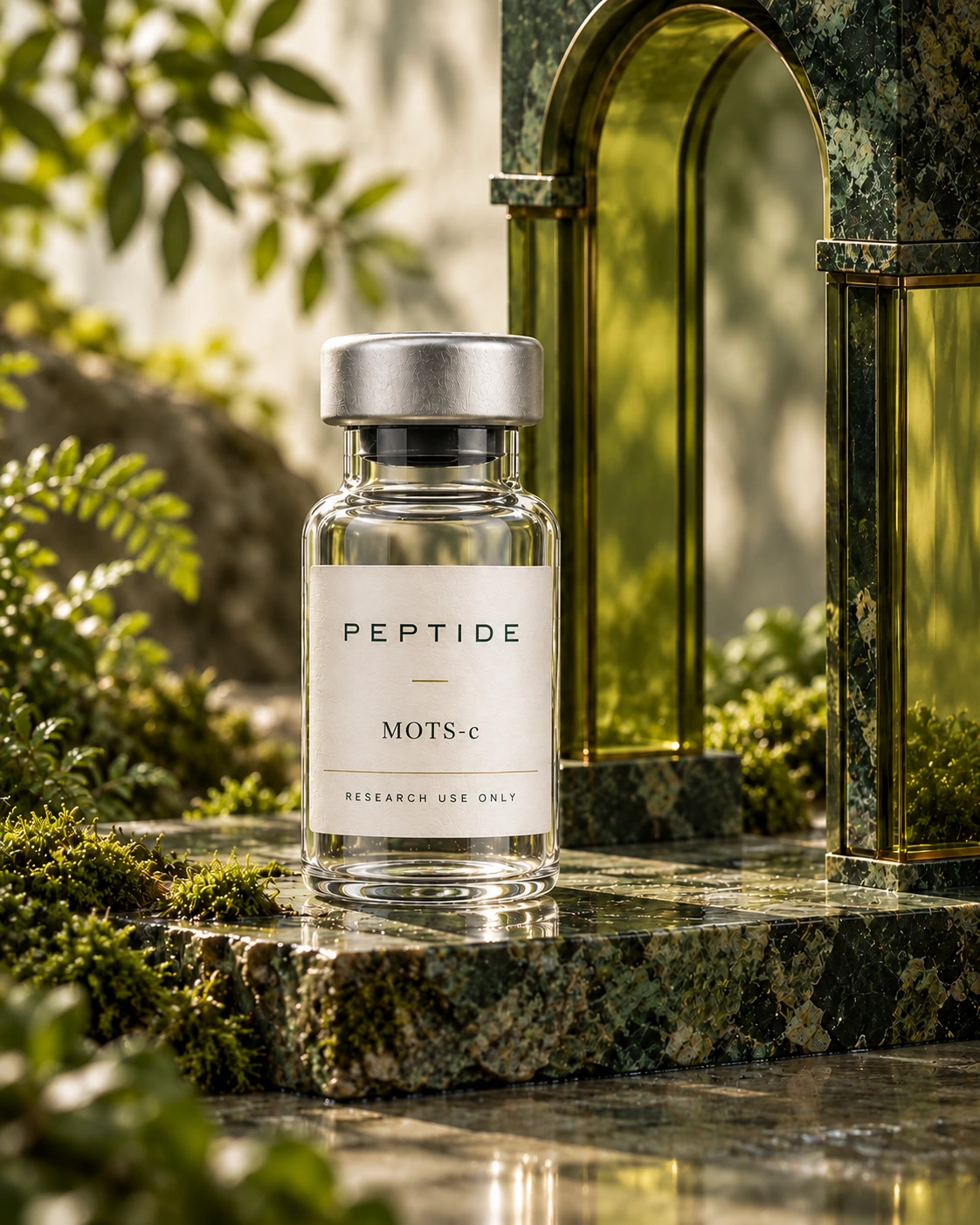
The vial is the focal point; the setting gives the composition depth without introducing a second product or an unrelated claim. An example message for an eligible offer might be “Explore the product details,” leading to the relevant specifications rather than a broad homepage.
The testing question is whether a focused introduction attracts more useful visits than a wider collection view. A different camera angle is an execution change. A different reason to visit the page is a message change. Record those separately.
Collection navigation: make the range understandable

The grouping makes the range visible in one frame. The destination should explain whether the items are sold separately or together. A visitor should not mistake a collection display for a bundle that the store does not actually offer.
An illustrative headline is “Meet the collection.” Use it to test understanding of the range, with product identities and destinations clearly documented in the brief. Compare that concept with a single-item introduction using the same eligible collection and reporting context.
Offer creative: one promotion with clear terms
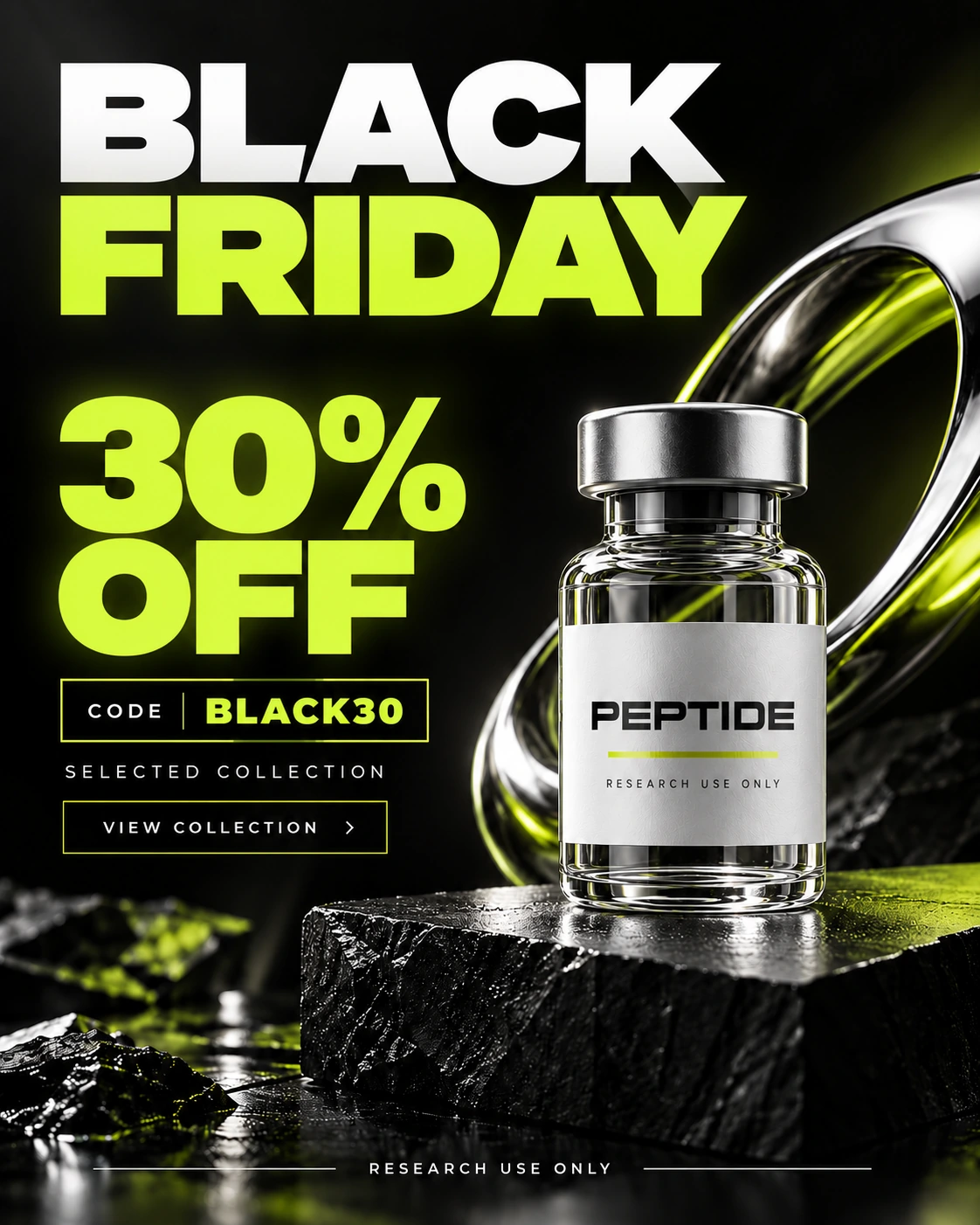
This portfolio asset illustrates a 30% promotion with a code. For a real campaign, replace the sample terms with the actual approved promotion, dates, exclusions and destination. Check the code at checkout and make the same terms visible on the landing page.
The useful question is whether the offer changes qualified demand and order contribution, not simply whether the discount increases clicks. Compare results with the margin impact of the promotion. A strong response to a discounted asset may not support the same acquisition cost for full-price orders.
Example ad copy and how to review it
For an eligible product-detail concept: “Explore the collection and read the product details before choosing your next research material.” For a collection concept: “One collection. A closer look at every detail. Browse the range and specifications.” These are illustrative messages to review against the actual business and destination, not pre-approved ads.
Write offer copy only after the terms are final: “Save [verified discount] on [eligible selection] with [code] until [date]. View the collection and offer terms.” Resolve the bracketed facts before production; never publish them as placeholders. Review the headline, body, image text, caption and destination together.
For Facebook and Instagram, adapt the layout to the selected placement. For TikTok, check the opening, captions and interface preview. Avoid putting a long explanation into a frame that viewers cannot comfortably read.
Define one question before requesting variations
Choose a question that changes a business decision. For example: do visitors respond better to a focused product introduction, a collection overview, or a clear commercial offer?
Those are three concepts. A blue background and a green background around the same product are two executions of one concept. Start by separating concept tests from execution tests in your production sheet. This prevents a large asset count from disguising a small range of ideas.
Write the brief in eight fields
- Objective: what action is this asset intended to support?
- Audience context: what does the intended visitor already know?
- Product facts: which verified details can be shown accurately?
- Message: the single idea the viewer should remember.
- Visual direction: setting, lighting, composition and brand references.
- Offer: exact terms, dates and limitations, if an offer is included.
- Destination: the page that answers the ad’s promise.
- Learning goal: the decision the test will help you make.
Include approved source files and a short list of statements that must be verified before use. Product documentation is useful reference material; it should not be converted into unsupported health, performance or human-use claims.
Build a three-concept matrix
For an illustrative collection launch, brief three directions:
- Product detail: one item, a readable identity and accurate specifications on the destination.
- Collection navigation: several items arranged so the viewer understands the range rather than mistaking it for a bundle.
- Commercial offer: one verified promotion, its conditions and the corresponding collection or offer page.
Give each direction one static asset and one short video execution. That produces six assets while retaining three understandable hypotheses. This is an example production structure, not a claim that six assets are the right number for every budget.
Use consistent identifiers such as product-detail-static, product-detail-video and collection-overview-video. Keep the message and destination recorded beside each file. If a result changes, you can identify what was tested without reconstructing the brief from the finished image.
Use motion to reveal information
For short product videos, write a scene sequence instead of asking for movement in every frame. An example might open with a clear collection view, move toward one relevant detail, then settle on the intended next action. Make the ending readable before the loop restarts.
Motion can support product recognition or demonstrate packaging. It should not imply a physiological effect or depict a use that the product and campaign are not authorized to promote. Keep the core message readable when the video is muted.
For placement adaptations, check the actual current platform preview. TikTok publishes safe-zone materials because interface elements can cover important content. Keep headlines, offers and calls to action in the visible area of the specific placement; a fixed margin copied from an old screenshot may not fit a new layout.
Match the destination to the concept
A collection ad should land on a page that makes the range easy to explore. An offer ad should land where the same offer and conditions are visible. A product-detail ad should lead to the relevant product information, rather than forcing the visitor to search a broad homepage.
Check the page on a phone alongside the actual ad. The product identity, offer and next step should agree. If the promotion ends, update or pause the corresponding asset instead of leaving a conflicting promise in circulation.
Record observations without inventing a winner
A review sheet can contain spend, impressions, link clicks, landing-page visits, purchases where validly measured, and the reporting period. Add a note on what was learned and what remains uncertain. Read signals in the context of the campaign objective and available measurement.
If one variation receives very little delivery, record that limitation. If a concept drives visits but few downstream actions, review the destination and traffic quality before concluding that a different font will fix the problem. Change one meaningful element for the next comparison and document it.
A copy-and-paste brief template
- Campaign and asset ID:
- Product and market review completed by:
- Intended audience context:
- One message:
- Verified product details:
- Visual reference and what to borrow from it:
- Offer terms and expiry:
- Destination URL:
- Static and video formats:
- Learning goal and review date:
Browse the creative portfolio, review ad creative services, or read the agency selection checklist before you scope a production batch.
Sources and review note
Reviewed October 13, 2026. The template and examples above are RunPeptideAds’ suggested planning framework, not platform performance benchmarks.